
Explore an exhaustive news analysis of the Trump-Xi truce, China’s strategic initiatives to reshape the Asian order, global trade implications, Taiwan tensions, technology controls, and what it means for modern geopolitics.
The Evolving Paradigm of US-China Engagement
The international system is currently experiencing a significant transition process which is closely linked with analysts’ attempts to assess the renewed dynamics between the Trump administration and Xi Jinping.
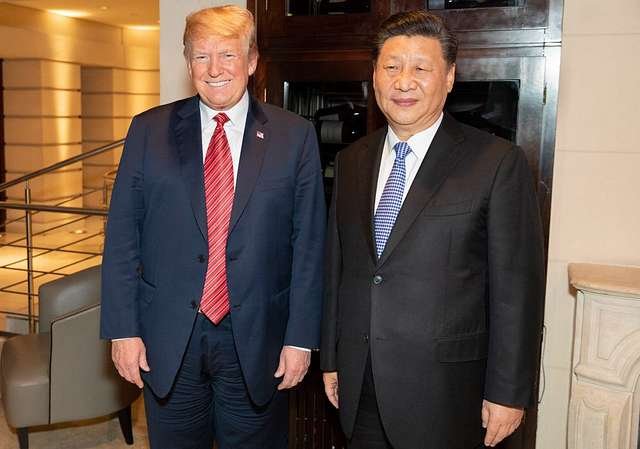
Image Courtesy: PICRYL
The initially perceived ceasefire in the economic battle between the two powers has evolved into a more nuanced statement, wherein Beijing looks to reshape the Asian order and utilize the offered respite from trade tensions with the U.S.
INTERESTED TO READ: 10 ADHD Homeschooling Ideas to Make Learning Easier and Less Stressful
In this regard, the present news analysis aims to discuss what motivates Beijing to transform the current situation in the Indo-Pacific. Additionally, the article will also consider the underlying economic forces, as well as the ramifications of technology competition and the resulting regional order.
Anatomy of the Trump-Xi Truce: Economic Pragmatism Meets Strategic Competition
First and foremost, in order to adequately analyze how Beijing seeks to reshape the situation in the Asian region, it is crucial to dissect the current Trump-Xi truce in order to understand the motivations of both sides.
Quite notably, the primary reason for the détente which occurred in 2023 was not a function of Washington and Beijing’s mutual intentions but was dictated by respective economic concerns.
The Economic Realities of the Trump-Xi Truce
After years of tariffs, export bans and restrictions, both economic superpowers felt the pressure from both their domestic industries and financial markets.
In this respect, it is important to note that multinational firms which operate in the supply chain industry experienced significant headwinds as a result of the competition between the world’s two largest economies.
With companies scrambling to mitigate the impact of higher costs, diversification away from the mainland becomes a viable option.
ALSO READ: US-China trade negotiations 2026 tech stocks
As a result, firms turned to Southeast and South Asian markets as more attractive supply chain partners.
Furthermore, the economic realities of the Trump-Xi trade war affected not only the multinational corporations but also the respective capitals of the two countries, with both the U.S. and China reluctant to see the economic downturn.
From the perspective of Washington, the economic burden imposed by the trade restrictions was an unbearable policy cost, which dictated the decision to return to the negotiating table.
As a result, the U.S. and China appear to have entered a strategic time-out in the trade war, which allows both sides to regroup and prepare new proposals on the matter.
However, it is crucial to note that despite the appearance of the truce, the U.S. continues to employ protectionist policies, ranging from export restrictions to technological limitations and capital controls.
How China Seeks to Reshape the Asian Order
With the immediate threat of the economic confrontation abating, Beijing turned its attention to the task of reshaping the Asian order.
The central idea of this strategy is the promotion of regional autonomy from the perspective of the U.S. and Western powers, followed by efforts to encourage economic integration within the region.
Regional Trade and Economic Integration
In this endeavor, the policy of economic integration which Beijing pursues with neighboring countries is a useful tool.
This trend is facilitated by the growing number of multilateral trade agreements which Beijing participates in, such as the RCEP treaty.
By virtue of these agreements, the neighboring countries of the PRC become more integrated into the regional system of economic distribution, which is further limited through the expansion of the Chinese economic presence in the region.
One way in which this is manifested is the BRI infrastructure projects, which facilitate the creation of a stronger economic and transport corridor between the PRC and the countries of South and Southeast Asia.
Security Norms and Institutions
The strategy which Beijing employs in the region is not limited to economic integration but also includes the establishment of alternative norms and institutions which challenge the existing rules of the game.
In this respect, the Global Security Initiative, which explicitly opposes the U.S., has emerged as an alternative to the existing security paradigm in the region.
The Trump-Xi Summit: Key Divergence
The intricacies of the U.S.-China relationship can be better understood through the prism of the key divergence between the objectives of the two countries.
Comparative Matrix: Key Issues at the Washington Summit
The complexities of contemporary US-China relations are best understood by examining the core divergence of goals between Washington and Beijing across critical geopolitical domains:
| Strategic Domain | U.S. Objectives & Positions | Chinese Objectives & Positions |
| Trade & Tariffs | Protect domestic manufacturing, eliminate market distortions, and enforce strict compliance. | Secure tariff rollbacks, maintain open export markets, and establish stable institutional trade boards. |
| Technology & AI | Safeguard advanced semiconductor ecosystems, prevent dual-use technology leaks, and impose AI export controls. | Prevent technological decoupling, secure access to global software standards, and advocate for shared AI governance frameworks. |
| Taiwan & Regional Security | Maintain deterrence in the Indo-Pacific, monitor arms sales, and prevent unilateral territorial changes. | Enforce the “One China” principle, halt foreign military sales to Taipei, and contest Western-led naval patrols. |
| Critical Minerals | Establish diversified, secure supply chains independent of Chinese rare earth monopolies. | Retain leverage over critical raw materials essential for global high-tech and green energy transition. |
The Geopolitical Ramifications of the Summit
Washington’s relationship with Beijing has far reaching implications which extend beyond the bilateral interaction of the two countries.
Instead, the changing nature of the U.S.-China relationship affects the position of other countries in the world, particularly the so-called middle powers as well as India.
The Indian Perception of the Changing U.S.-China Dynamics
The changing nature of the U.S.-China relationship is viewed by New Delhi as both an opportunity and a potential threat.
On the one hand, the shift towards the more stable relationship between the U.S. and China reduces the likelihood of serious military incidents involving India with either of the two powers.
On the other hand, the Indian policymakers are particularly concerned with the prospect of “bilateral deal” between the U.S. and China, which may have a detrimental impact on the national security and economic interests of India.
The European Union’s Relationship with the U.S. and China
Notably, the concerns similar to those of India are voiced by European leaders.
As the EU interacts with Beijing on the issues of trade and environmental protection, the European leaders need to ensure that the U.S. would not undermine the efforts of the EU to bolster the economic security and institutional reliability of the European Union.
The Technology Competition
Lastly, it is important to note that while trade tariffs are a major source of contention between the U.S. and China, the strategic competition between the two countries is particularly acutely felt in the domain of technology and AI.
In this respect, the export restrictions imposed by the U.S. on China are explicitly aimed at preventing the PRC from gaining access to the most advanced technologies in microprocessors fabrication.
At the same time, the competition in the domain of technology and AI drives China to promote its own standards of technology, ranging from telecommunications to artificial intelligence.
Conclusion
Overall, the analysis of the recent developments in the U.S.-China relations allows suggesting that strategic competition and pragmatic engagement are not necessarily mutually exclusive.
While the Trump-Xi truce is beneficial in terms of preventing economic decoupling, it is not an end point but instead a part of a larger strategic design.
As China attempts to reshape the Asian order, the stability of the truce will be tested repeatedly by the unresolved questions of territorial disputes, technology competition, and strategic rivalry.
Frequently Asked Questions (FAQ)
What is the main significance of the Trump-Xi truce?
The Trump-Xi truce is aimed at stabilizing the global economy through the prevention of further escalation of tariffs and trade barriers, as well as through the facilitation of dialogue between Washington and Beijing.
Why does China want to reshape the Asian order?
The current Asian order which is based on U.S. leadership is increasingly questioned by Beijing, which seeks to promote regional autonomy on economic and security matters.
How does the U.S.-China summit affect the supply chains?
While the global markets welcomed the news of the summit, the export restrictions imposed by the U.S. and the competition for technological competition ensure that the stability of the supply chains is a matter of concern.
What is the role of regional powers such as India in the discussed dynamic?
The changing nature of the U.S.-China relationship ensures that the regional powers such as India find themselves in a unique position.
On the one hand, the reduction of tensions between the U.S. and China is beneficial for New Delhi, as it reduces the likelihood of direct conflict with either of the two powers.
However, at the same time, the possibility of a “grand bargain” between the U.S. and China is a matter of concern for India.