
An in-depth analysis of the escalating France riots, Donald Trump’s sharp criticism of Emmanuel Macron, and the severe political and economic fallout.
The global political spotlight has turned sharply toward Europe as the France riots continue to spiral out of control.
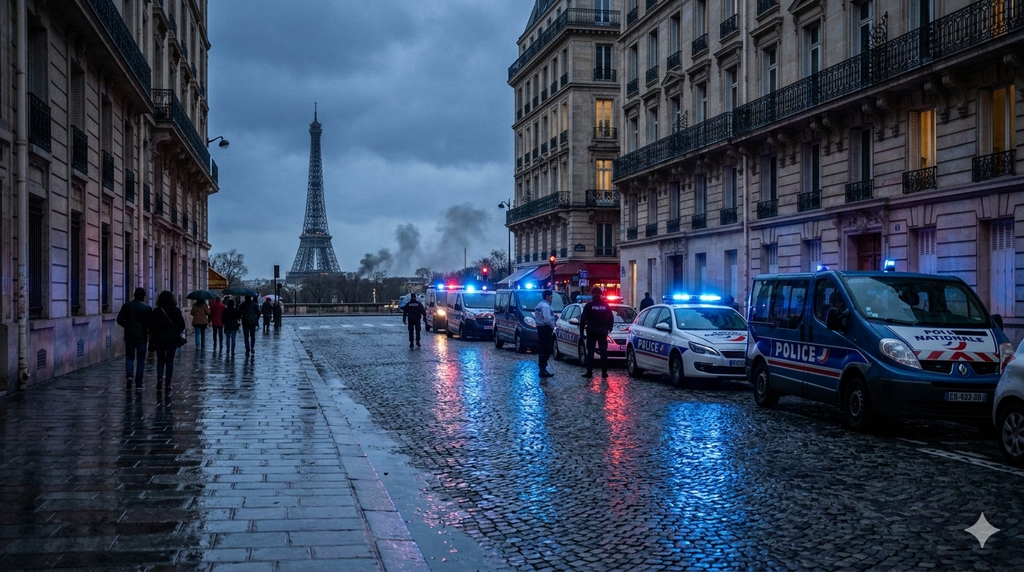
What began weeks ago as localized high school student demonstrations over underfunded classrooms and crumbling educational facilities has rapidly escalated into a full-scale national security crisis.
Credits: Google Vids
As violence erupted across major urban centers, the riots transformed into widespread civil turmoil fueled by soaring fuel prices, inflation, and declining purchasing power.
Storefronts have been destroyed, public buildings targeted, and emergency security measures enforced across multiple regions.
Also Read: Ukraine Russia Drone Strikes Escalate: 1,000 Drones Target Russian Energy Hubs
The expanding scope of the riots caught international attention when former US President Donald Trump intervened with sharp criticism directed at French President Emmanuel Macron.
Commenting on the riots, Trump claimed the crisis was driven entirely by open border policies, asserting that Paris would soon undergo massive demographic shifts if strict border controls were not reinstated.
1. The On-Ground Reality of the Escalating France Riots
The physical and economic damage caused by the France riots has strained municipal infrastructure and emergency response teams across the nation. Official statistics paint a grim picture of urban destabilization during these riots:
- Massive Arrests: Security personnel have detained over 2,400 individuals since the riots intensified.
- Commercial Property Damage: An estimated 3,000 businesses have been vandalized, looted, or set ablaze throughout the riots.
- Strict Curfews Implemented: Authorities enforced overnight curfews in central Paris hotspots like Place de la République and Les Halles to quell the riots.
- Government Resignation Rejected: French Interior Minister Laurent Nuñez offered his resignation following intelligence failures during the riots, though President Macron rejected it to maintain command stability.
2. Global Political Reactions to the France Riots: Trump Slams Macron
The international fallout from the riots quickly crossed the Atlantic. Donald Trump used the images of burning streets during the riots to attack Macron’s leadership, declaring:
“The France thing is a very sad situation… What’s happening in the France riots has to do with immigration — not schools, not anything — it’s immigration. I told President Macron, ‘Close up your borders!'”
While French labor unions and student organizations emphasize that the riots stem from economic hardship and educational grievances, political opponents have leveraged the riots to push hardline migration policies.
Far-right figures in Europe and conservative lawmakers in the US have cited the riots as a cautionary tale for Western democracies.
3. Comparing Perspectives on the France Riots
To better understand the contrasting viewpoints surrounding the France riots, the table below outlines the core differences between local economic realities and international rhetoric:
| Key Dimension | Local Perspective on the France Riots | Political Framing of the France Riots |
| Primary Root Causes | Student grievances, inflation, high fuel costs during the riots. | Attributed to illegal immigration and border policy failures in the riots. |
| Security Impact | Over 2,400 arrests and 3,000 damaged businesses from the riots. | Portrayed as an existential collapse of state control during the riots. |
| State Emergency Measures | Nighttime curfews and altered police tactics to counter the riots. | Demands for total border closures and deportation sweeps due to the riots. |
4. Impact of the France Riots on Daily Life and Citizens
The ongoing France riots have disrupted daily routines for millions of residents, small business owners, and international visitors.
A. Economic Losses and Commercial Recovery
With thousands of commercial shops damaged during the riots, business owners face severe financial stress. Insurance claims and state support will be critical to rebuilding corridors hit hardest by the riots.
B. Curfews and Mobility Restrictions
Nighttime curfews imposed to suppress the riots have halted public transport, impacted night-shift workers, and shut down evening commerce across central Paris.
C. Political and Societal Division
The rhetoric surrounding the riots has deepened societal polarization.
As discussions around the riots dominate political debates, upcoming national elections will likely reflect shifting public sentiment toward strict law-and-order governance.
Conclusion: The Road Ahead After the France Riots
The riots represent a critical junction for European domestic policy. As law enforcement works to maintain order following the riots, state leaders must address both immediate public safety challenges and underlying economic anxieties to ensure long-term stability.
Frequently Asked Questions (FAQ)
1. What triggered the initial France riots?
The France riots began as student-led demonstrations against classroom shortages and educational policies, but expanded rapidly as public frustration over fuel costs and inflation mounted.
2. How are authorities responding to the France riots?
To manage the riots, French authorities deployed thousands of police officers, established emergency overnight curfews in Paris, and banned public gatherings in affected zones.
3. What was Donald Trump’s reaction to the France riots?
Trump commented extensively on the riots, slamming President Macron and asserting that uncontrolled immigration was the sole cause of the riots.
4. What is the financial cost of the France riots?
The France riots have resulted in damage to over 3,000 commercial properties, leading to millions of euros in economic losses for local business owners.