

Diplomacy between the United States and Iran is set to resume this week with high‑stakes nuclear negotiations scheduled Talks in Oman for Friday in Muscat, —a neutral venue that underscores both the urgency and the fragility of the moment.
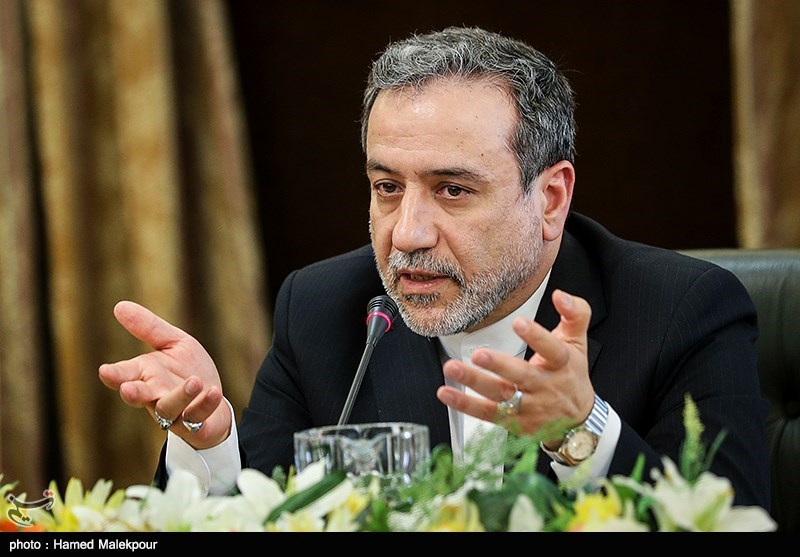
Iranian Foreign Minister Abbas Araghchi has confirmed that “nuclear talks” with the US will begin at 10 a.m. local time, after days of wrangling over format, location, and scope, while a White House‑linked official has likewise affirmed Washington’s participation.

Why Talks in Oman—and why now?
Oman has long served as a discreet backchannel between Washington and Tehran, hosting secret prelude talks before the 2015 nuclear deal and again during later crises.
By shifting the venue from Turkey to Muscat, Iran has secured a setting it views as more politically neutral and less exposed to regional rivalries, while the US has accepted the change in order to keep a potential diplomatic window open.

The timing, however, is anything but calm: the meeting comes as President Donald Trump has ordered fresh military deployments to the Arabian Sea following Iran’s violent crackdown on protests last month, raising fears of a looming strike and possible escalation into wider conflict.
What’s on the table
Mediators from Qatar, Turkey, and Egypt have reportedly presented a framework of “essential principles” that would require Iran to substantially scale back its uranium enrichment, cap its ballistic missile activities, and restrict arming regional allies such as Hezbollah and Hamas.
What Are Practical Strategies for Parents with ADHD Kid
US officials, including Secretary of State Marco Rubio, have signaled that Washington wants to address not only the nuclear file but also Iran’s missile program, support for proxy forces, and its treatment of domestic dissent.
Tehran, in contrast, has framed the Friday session narrowly as “nuclear talks,” signaling reluctance to bundle in broader security or human‑rights issues, which it sees as infringements on its sovereignty.
A high‑stakes balancing act
Behind the diplomatic choreography lies a stark asymmetry of pressure. For Washington, the talks are part of a strategy to avoid a costly war while still forcing concessions from an Iranian regime it views as destabilizing.
For Tehran, the risk is twofold: failure to secure sanctions relief or a credible security guarantee could deepen economic strain and fuel more unrest, while appearing to cave too easily on nuclear or missile programs would undermine the narrative of “resistance” that underpins the clerical establishment’s legitimacy.
Trump’s repeated warnings that “bad things” may happen if no deal emerges have sharpened the sense of brinkmanship. Yet even his own officials have stressed that the primary goal of the Muscat meeting is to de-escalate, not to stage‑manage a final agreement.
In that light, Friday’s session may matter less for what it resolves than for whether it prevents a slide into open conflict—and whether it can create enough trust for follow‑on rounds.
Regional implications
The Gulf and wider Middle East are watching closely. Arab states that have grown wary of both Iranian adventurism and American unpredictability are quietly urging restraint, even as some have privately signaled openness to joining a broader regional security dialogue if a nuclear understanding can be reached.
For Israel and Gulf allies, any deal that leaves Iran’s missile capabilities or regional proxy networks intact would be viewed as incomplete at best and dangerous at worst.
In this context, the Talks in Oman meeting is less a return to the 2015‑style diplomacy than a test of whether the US and Iran can manage their rivalry through calibrated negotiation rather than open confrontation.
If the talks produce even a temporary freeze on enrichment or a mutual pledge to avoid escalation, they could buy breathing room for a more durable framework. If they collapse under maximalist demands or domestic political pressures, the region may find itself staring down a far more volatile chapter of US–Iran hostility.
Conclusion: Talks in Oman at a Crossroads
The Talks in Oman represent a pivotal moment where diplomacy could either defuse a powder keg or ignite further escalation between the US and Iran. Success in these Talks in Oman hinges on mutual compromises that address nuclear ambitions without unraveling into broader confrontation, offering a slim but vital chance for regional stability amid Trump’s assertive posture and Tehran’s defiance.
FAQ
When and where are the US-Iran nuclear talks in Oman happening?
Scheduled for Friday in Muscat, Oman, starting at 10 a.m. local time.
Why was Oman chosen as the venue?
Oman serves as a neutral backchannel mediator with a history of facilitating US-Iran discussions.
What issues will the talks cover?
Primarily Iran’s nuclear program, with US pushing for missile curbs and proxy limits; Iran prefers a narrow nuclear focus.
Who confirmed the talks?
Iranian Foreign Minister Abbas Araghchi and a US official.
What are the risks if talks fail?
Potential US military action and wider Middle East conflict, amid ongoing tensions.